

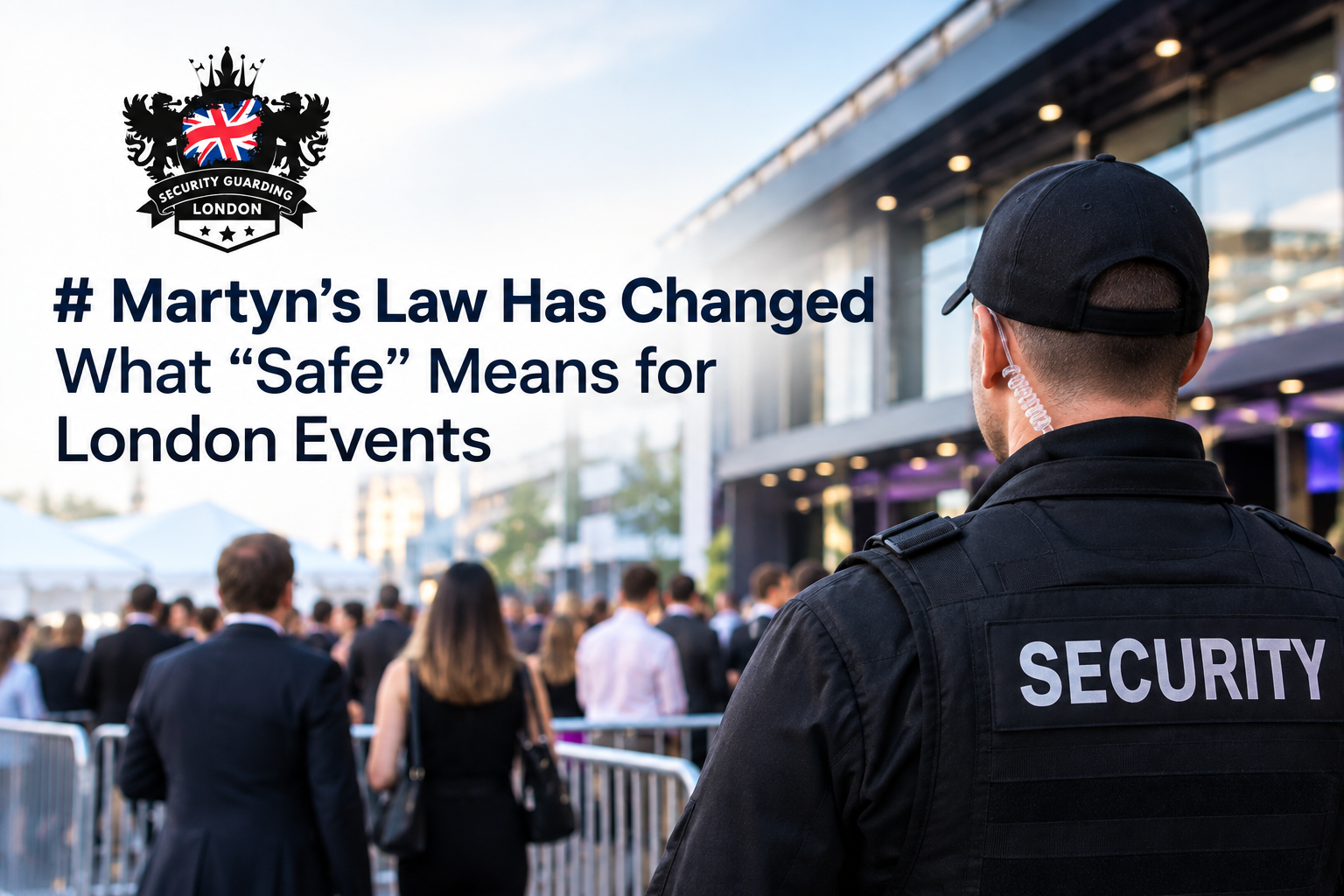
A packed venue with no documented plan is now a legal liability, not just a risk. For years, organisers treated safety as a checklist item handled the week before doors open. That's no longer good enough.
Why Event Security Now Means More Than a Guard on the Door
Event security has shifted from a nice-to-have into a statutory duty. Under the Terrorism (Protection of Premises) Act 2025 - known as Martyn's Law - any publicly accessible venue or event with a capacity of 200 or more must show documented counter-terrorism preparations once enforcement begins in spring 2027, with heavier obligations for venues over 800. An estimated 155,000 standard-tier premises and 25,000 enhanced-tier premises across the UK fall within scope, and the Security Industry Authority is taking on a new regulatory role to police compliance. For London organisers, that means the summer 2026 season is effectively a dry run: venue clients are already asking providers how compliance will be evidenced on the day, not just promised in a proposal.
What Professional Event Security Actually Covers
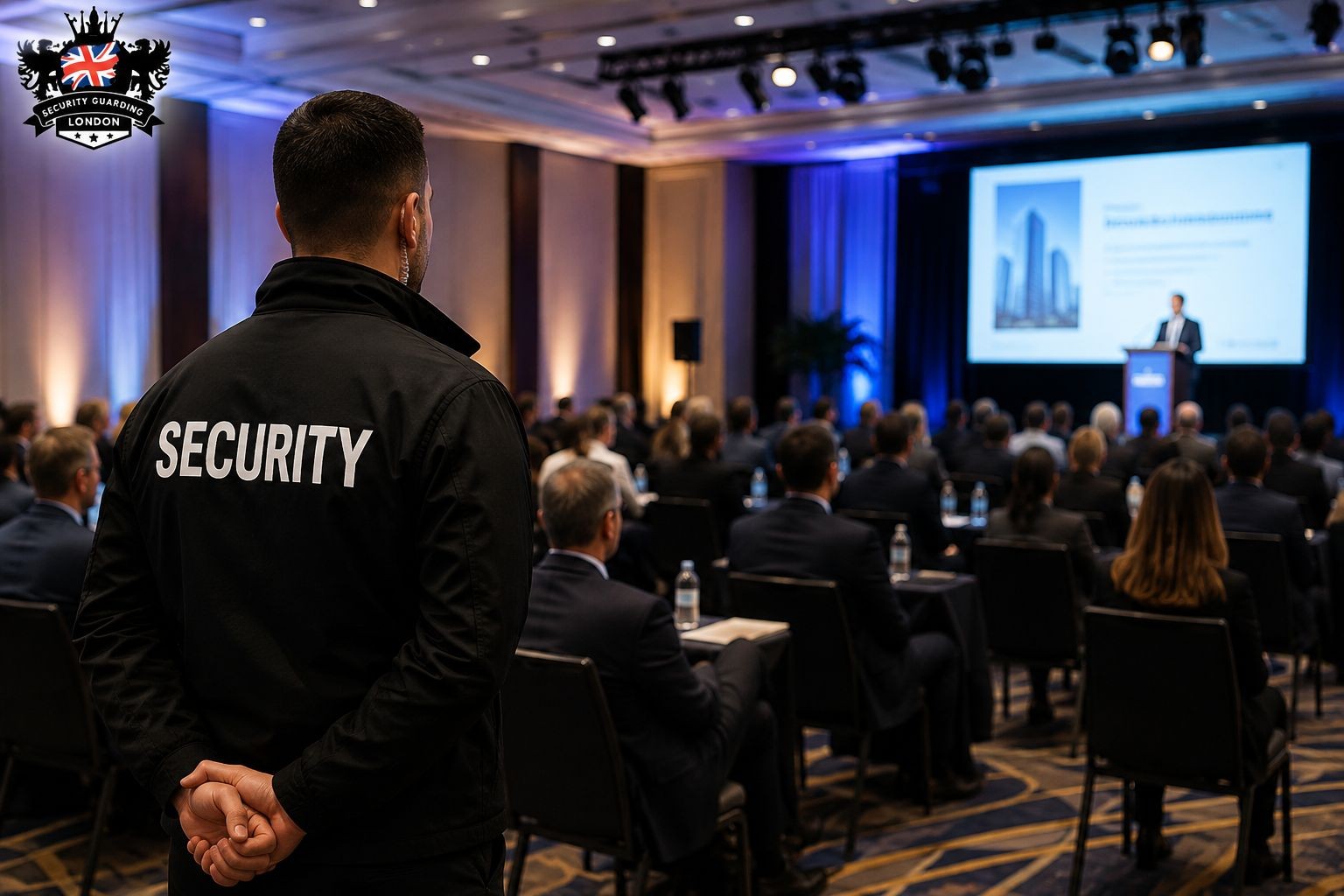
A documented plan is only as good as the team executing it. Solid event security London organisers can rely on combines several distinct disciplines, not one generic function:
-
Access control and bag/ID checks at entrances, so only ticketed or authorised guests get through
-
Crowd management to prevent overcrowding at pinch points, stages, and exits
-
SIA-licensed door supervisors and stewards trained in conflict resolution and evacuation procedures
-
CCTV and real-time incident reporting tied to a live control point, not just recorded footage
-
VIP and close protection cover for high-profile guests, launches, or galas requiring discretion
Layered Cover for Different Event Types
No two events carry the same risk profile, and treating them identically is where plans fail. A corporate product launch in the West End needs discreet, front-of-house trained staff; a public festival needs full crowd-flow management and multi-agency coordination. Providers offering broader security services London businesses often layer in complementary capability - mobile patrols for site perimeters, dog security for outdoor grounds and vehicle checks, and standard site guarding that carries over from daily operations into event days, so a client isn't juggling separate contracts for routine cover and one-off occasions.
Choosing Between Security Guard Companies London Event Organisers Shortlist
The decision usually comes down to licensing, planning depth, and speed. Every operative must hold a valid SIA licence - non-negotiable under the Private Security Industry Act 2001. Beyond that, ask whether the provider builds a genuine event-specific risk assessment, or hands over a template plan with the venue name swapped in.
Security Guards London Limited has completed 368+ projects across 132 areas, deploying SIA-licensed teams within a few hours for short-notice bookings, backed by 24/7 hands-on management rather than a call centre. That combination of speed and real oversight is what separates a genuine security partner from a rota of hired hands.
|
Approach |
Planning |
Compliance Readiness |
Response |
|
Basic door staff only |
None or generic |
Not Martyn's Law ready |
Reactive |
|
Template risk assessment |
Reused across venues |
Partial, undocumented |
Slow escalation |
|
SG London layered model |
Event-specific assessment |
Built for Martyn's Law evidencing |
Rapid deployment, 24/7 control room |
Building an Event Security Plan That Holds Up
A workable plan starts with the venue and the guest list, not a standard headcount formula. That means walking the site to map entrances, exits, and pinch points; confirming expected capacity against fire safety and Martyn's Law thresholds; and agreeing communication protocols between stewards, management, and emergency services before the first guest arrives. A credible provider will flag when your event crosses into enhanced-tier territory rather than waiting for you to ask.
Frequently Asked Questions
1. Does my event need Martyn's Law compliance?
Yes, if your venue can hold 200 or more people at once, standard-tier duties apply now, with enhanced-tier obligations from 800+ ahead of spring 2027 enforcement.
2. How quickly can event security be arranged in London?
Security Guards London Limited can typically deploy SIA-licensed teams within a few hours, covering both planned bookings and urgent short-notice event cover.
3. Is CCTV enough to secure an event on its own?
No, cameras only record what's happened. Pairing CCTV with live stewards, access control, and rapid response closes the gap between seeing an incident and acting on it.
4. Can the same provider cover VIP guests and general crowd management?
Yes, a layered team typically combines discreet close protection for VIPs with SIA-licensed stewards and access control for the wider guest list at the same event.
5. What happens if my venue is over capacity for its risk assessment?
Overcrowding breaches both licensing conditions and Martyn's Law duties. A proper plan sets hard capacity limits with staff trained to enforce them at entry points.
Making the Call: What Actually Matters
Cut through the sales pitch and three things decide whether an event stays safe. First, is every operative properly SIA-licensed, not just badge-deep? Second, has the provider actually assessed your specific venue and guest profile, rather than reusing a generic plan? Third, can they prove - not just promise - that they're ready for Martyn's Law scrutiny when it lands in 2027. Get those three right, and crowd flow, VIP handling, and out-of-hours patrols all fall into place behind them. Get any one wrong, and no amount of uniformed presence at the door will cover the gap.
Don't leave compliance to guesswork. Request a Martyn's Law-ready event security assessment from Security Guards London Limited today.